
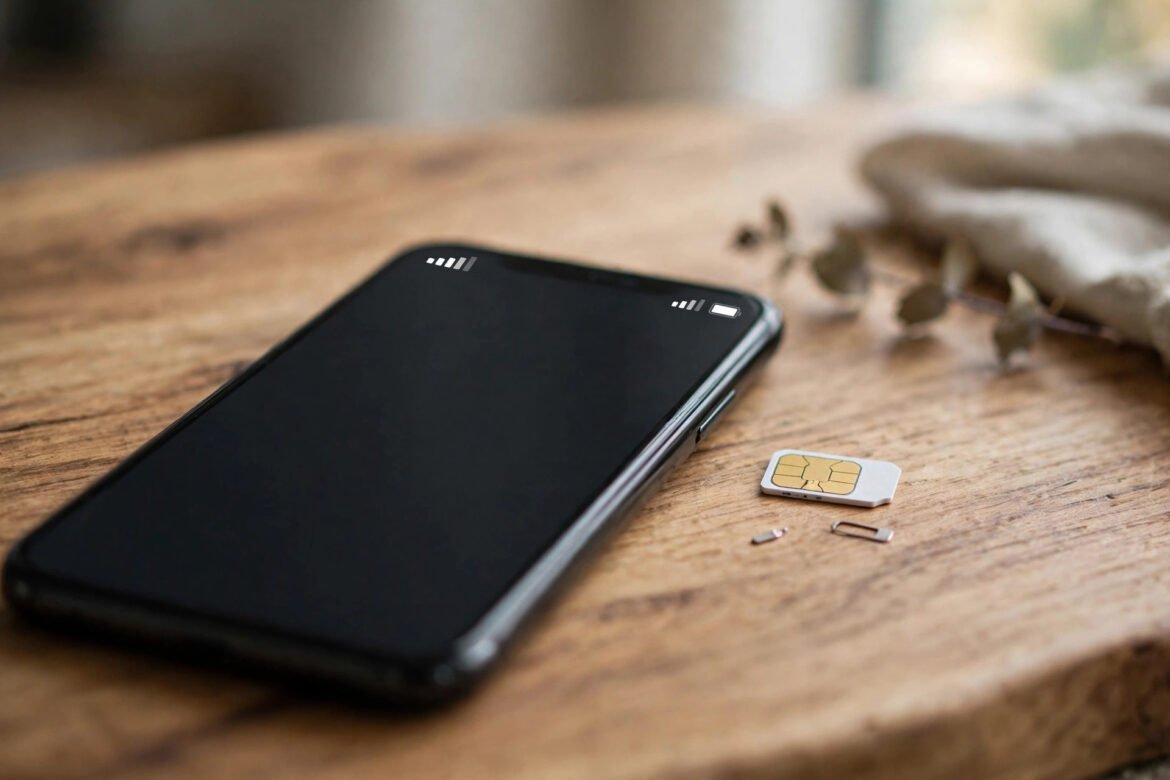
If you already own a phone you are happy with, paying for a new handset every month rarely makes sense. That is where SIM-only deals come in: you pay for the calls, texts and data alone, and you keep your existing phone. O2 SIM-only deals are among the most searched options in the UK, and for good reason. O2 is one of the country’s biggest mobile networks, with its own network infrastructure and a long-established high-street presence, so its SIM-only range is worth understanding before you commit to anything.
This guide explains O2 SIM-only deals in plain English, without pushing any particular plan. It covers what SIM-only means, how contract lengths work, how to think about data allowances, why coverage matters more than headline features, how to compare deals fairly, how switching and keeping your number works, and the common pitfalls that catch people out. By the end, you should be able to judge any SIM-only deal on its merits, rather than on its advertising.
What Does SIM-Only Actually Mean?
A SIM-only deal gives you a SIM card and a mobile plan, but no handset. Your monthly payment covers your allowance of minutes, texts and mobile data, plus access to the network’s services, such as voicemail and customer support. You put the SIM into a phone you already own, and that phone works on the new network, provided it is unlocked or already compatible.
This is different from a handset contract, where a large part of your monthly payment goes towards paying off a phone over the length of the agreement. With SIM-only, there is no handset to pay for, which is why SIM-only plans are generally more flexible and easier to change. It also means you are free to upgrade your phone separately, whenever you choose, without being tied to a network’s handset upgrade cycle.
SIM-only suits several groups particularly well. It suits people whose phone still works fine and who see no reason to replace it. It suits people coming to the end of a handset contract who want to keep their phone and reduce their monthly outlay. It suits people who want flexibility, since shorter SIM-only terms are common. And it suits anyone who bought a phone outright, whether new or second-hand, and simply needs a network to run it on.
Contract Lengths and Flexibility
One of the first decisions with any SIM-only deal is how long you want to commit for. The most flexible option is a rolling monthly plan, which you can usually leave with relatively short notice. This is ideal if you are unsure how much data you need, if you expect your circumstances to change, or if you simply do not like being tied down. The trade-off is that rolling plans sometimes offer less generous allowances than longer contracts, since the network has less certainty that you will stay.
Longer SIM-only contracts, commonly running for a year or more, tend to come with larger allowances or added extras in exchange for your commitment. They can be good value if you are confident about your usage and happy to stay put, but they reduce your freedom to switch if a better deal appears or if your needs change. Before signing a longer deal, it is worth asking yourself how likely your usage, location or budget is to change during that period.
There is no universally right answer here, only the right answer for your situation. A useful rule of thumb is to choose the shortest term that still gives you the allowance you need, unless a longer term offers a clear benefit you actually value. Flexibility has real worth, especially in a market where deals change frequently, and it is easy to underestimate how much your circumstances can shift in a year.
Data Allowances: How Much Do You Really Need?
Data is usually the deciding factor in a SIM-only deal, and it is also the easiest thing to get wrong. Many people overestimate how much data they use, paying for a large allowance they never touch, while others underestimate it and end up throttled, charged extra, or cut off mid-month. The honest way to judge is to look at your actual usage, which most phones report in their settings, averaged over a few months rather than a single unusual one.
Think about how you actually use your phone. Light users, who mainly browse, message, check email and use maps, generally need only a modest allowance, especially if they spend most of their day connected to home or work Wi-Fi. Moderate users, who stream some music or video, use social media regularly and browse on the move, need noticeably more. Heavy users, who stream video daily, play games online, tether a laptop to their phone, or work away from Wi-Fi for long stretches, need the largest allowances, and should think carefully about whether an unlimited-style plan suits them better than a capped one.
Mobile gaming is a good example of a use that can quietly consume data, particularly for online multiplayer games and large downloads. If gaming on your phone is a regular habit, it is worth reading our guide, Game to Play: How to Pick the Perfect Game for Any Mood, Device or Session, which explains how to match games to your device and session length, and why connection quality matters for online play. Games that download large updates over mobile data can eat through an allowance surprisingly fast, so downloading updates over Wi-Fi is a simple habit that saves a lot of data.
Wi-Fi habits matter enormously. If you are on Wi-Fi at home and at work, your mobile data may only need to cover commuting, errands and weekends, which is far less than it first appears. Conversely, if you rarely have Wi-Fi access, or you regularly use your phone as a hotspot for other devices, your data needs will be much higher. Always judge a data allowance against your real life, not against a marketing description of what it can supposedly do.
Coverage and Network Quality: The Factor People Overlook
A generous allowance is worthless if you cannot get a signal where you actually live, work and travel. Coverage is the single most important factor in any mobile deal, and it is also the one people check least. Networks publish coverage maps, and these are a useful starting point, but they are estimates rather than guarantees, and indoor coverage can differ sharply from outdoor coverage in the same postcode.
The most reliable test is lived experience: ask friends, family or colleagues on the same network how their signal holds up in the places that matter to you. If you work in a particular office, commute on a particular route, or spend weekends in a particular area, coverage in those specific places matters far more than national averages. Some networks also let you check coverage by postcode before you commit, which is worth doing for your home and work addresses at minimum.
Speed matters too, though it is often overstated. For browsing, messaging, maps and music, even a modest connection is perfectly adequate. For video streaming, video calls and online gaming, a faster and more stable connection makes a real difference, and a congested network at peak times can feel slow even in an area with nominally good coverage. If you rely on your phone for work calls or video meetings, prioritise a network with a reputation for reliability in your area over one that simply promises the fastest headline speeds.

How to Compare O2 SIM-Only Deals Fairly
Comparing SIM-only deals is harder than it looks, because the headline figures are rarely the whole story. A deal that looks generous on data may have a long contract, limited extras, or terms that matter to you, while a plainer deal may suit you better in practice. The way to compare fairly is to line up the factors that actually affect your experience, side by side.
Start with the fundamentals: the monthly cost, the length of the commitment, and the allowance of data, minutes and texts. Then look at what happens when you exceed your allowance, since out-of-bundle charges and speed restrictions vary and can be a nasty surprise. Check whether the plan includes extras you will genuinely use, such as roaming allowances, hotspot use, or access to perks, and ignore extras you will never touch, however attractive they sound in an advert.
Also consider the less glamorous factors. How easy is it to manage your account and track your usage? How good is the network’s customer support when something goes wrong? Can you change your plan up or down mid-contract if your needs shift? Can you add family members or additional lines easily? These practical details affect your day-to-day experience far more than a small difference in headline allowance.
Finally, be wary of comparing deals purely on monthly cost. The cheapest plan that does not meet your needs is poor value, because you will either pay extra charges or live with a service that frustrates you. The right plan is the one that covers your real usage, on a network with good coverage where you live, for a term you are comfortable with, at a cost that fits your budget. That combination is worth more than any single headline figure.
Switching and Keeping Your Number
Switching to a SIM-only deal is much simpler than many people expect, and keeping your existing number is straightforward. In the UK, the standard route is the PAC code system. You request a Porting Authorisation Code, known as a PAC, from your current provider, usually by text message or through your account, and you give that code to your new provider when you sign up. Your number then transfers across, typically within a working day or so, and your old account closes automatically.
There are a few practical points worth knowing. Requesting a PAC does not immediately cancel your service, so you can time the switch to suit you. Once you give the PAC to your new provider, the transfer process begins, and there may be a brief period during the switch when your service is interrupted, so it is sensible not to switch in the middle of an important call or while you are expecting an urgent message. If you do not want to keep your number, you can instead request a STAC code, which ends your old service without transferring the number.
Before switching, check whether you are still inside a minimum contract term with your current provider, since leaving early can trigger an early termination charge. If you are out of contract, you are generally free to leave with the notice period in your agreement. It is also worth checking that your phone is unlocked: a phone locked to your old network will not accept a new provider’s SIM until it is unlocked, and while most providers now unlock phones on request, it is one more step to arrange before your new SIM arrives.

Common Pitfalls to Avoid
- Paying for data you never use: Check your real usage over several months before choosing an allowance, rather than guessing or accepting a salesperson’s estimate.
- Ignoring coverage: A great deal on paper is a poor deal in a signal dead zone. Check coverage where you live, work and travel, not just nationally.
- Overlooking the contract term: A longer deal may look better value, but it locks you in. Make sure you are comfortable with the commitment before signing.
- Forgetting about price changes: Many mobile contracts allow annual price rises linked to inflation or set out in the terms. Read the terms so a future rise does not come as a shock.
- Missing out-of-bundle charges: Understand what happens if you exceed your data, minutes or texts, and set usage alerts or caps where your provider offers them.
- Switching while still in contract: Check your current contract end date first, so you do not trigger an early exit charge you could have avoided by waiting.
- Not checking your phone is unlocked: A locked phone will reject a new SIM. Confirm your phone is unlocked before your new SIM arrives.
- Choosing extras over essentials: Perks and add-ons are only valuable if you use them. Prioritise allowance, coverage and term length first.
Who Is an O2 SIM-Only Deal Best For?
An O2 SIM-only deal makes most sense for someone who already has a phone they like, who wants a straightforward monthly plan, and who values O2’s network coverage and extras. It is a strong option for people coming off a handset contract, for people who bought their phone outright, and for anyone who wants the flexibility to change plans without also changing phones.
It may be less suitable if you need a new handset, in which case a handset contract or buying a phone separately may work out better, or if O2’s coverage is weak in the places that matter most to you, in which case another network’s SIM-only range deserves a look. It is also worth comparing O2’s own SIM-only deals with those from virtual networks that run on O2’s infrastructure, since these sometimes offer similar coverage with different terms. The right choice depends on your usage, your location and your appetite for commitment, not on brand loyalty alone.
Frequently Asked Questions
What is an O2 SIM-only deal?
An O2 SIM-only deal is a mobile plan from O2 that provides a SIM card with an allowance of calls, texts and data, but no handset. You use it in a phone you already own, and you pay only for the mobile service rather than for a phone as well.
Can I keep my phone number when switching to O2 SIM-only?
Yes. You request a PAC code from your current provider and give it to O2 when you sign up, and your existing number transfers to your new SIM, usually within a working day or so.
Do I need an unlocked phone for a SIM-only deal?
Yes, in practice. Your phone must accept a SIM from the new network, which means it needs to be unlocked or already on a compatible network. Most providers will unlock a phone on request, so check this before your new SIM arrives.
How do I know how much data I need?
Check your phone’s built-in data usage report, averaged over a few months, and consider how much time you spend on Wi-Fi. Light users who are mostly on Wi-Fi need far less mobile data than heavy streamers, gamers or people who tether other devices.
Conclusion
O2 SIM-only deals are a sensible, flexible way to stay connected without paying for a handset you do not need. The best deal for you is not necessarily the one with the biggest allowance or the lowest headline cost; it is the one that matches your real usage, works well where you actually live and travel, and commits you for no longer than you are comfortable with. Check your usage, check coverage in your area, compare the full terms rather than just the headline figures, and make sure your phone is unlocked and your number transfer is arranged before you switch. Do that, and a SIM-only deal becomes what it should be: a simple, good-value service that quietly does its job in the background, while you get on with using your phone.