Online games have become one of the most popular forms of entertainment in the world, and it is easy to see why. They let you play with friends across the country, compete with strangers around the globe, explore vast virtual worlds, or simply pass ten quiet minutes with a puzzle on your phone. Unlike a game you buy once and play alone, an online game is a living thing: it updates, it changes, and its community shapes the experience as much as its designers do.
But the sheer choice can be overwhelming. Browser games, multiplayer shooters, mobile games, cloud games, subscription libraries, free-to-play titles: the labels overlap, the quality varies enormously, and it is not always obvious which games are worth your time or safe for your family. This guide explains online games in plain English: the main types, how to choose, what kind of internet connection you actually need, how to stay safe, and how to enjoy online gaming without overspending.
What Counts as an Online Game?
An online game is any game that connects to the internet as part of how it is played. That connection might be essential, as in a multiplayer match where every player is connected at the same time, or it might be optional, as in a single-player game that downloads updates, offers online leaderboards, or lets you share progress with friends. Some online games run entirely in a web browser with nothing to install, while others are large downloads on a console or PC that happen to include online modes.
The important distinction is between games that need other people and games that merely use the internet. A massively multiplayer world is empty without its players, while a puzzle game with online leaderboards plays exactly the same whether anyone else is online or not. Understanding which kind you are looking at helps you judge whether it will suit your schedule, your connection and your tolerance for other people’s behaviour.
The Main Types of Online Games
Online games come in many forms, but most fall into a few broad types, each with its own strengths and demands.
Browser games run in a web browser with no download and no installation. They are usually quick to start, light on hardware, and ideal for short sessions on a shared or older computer. Their simplicity is their strength: you can be playing within a minute, and you can stop just as fast. They are also a good way to try a genre before committing to a bigger game.
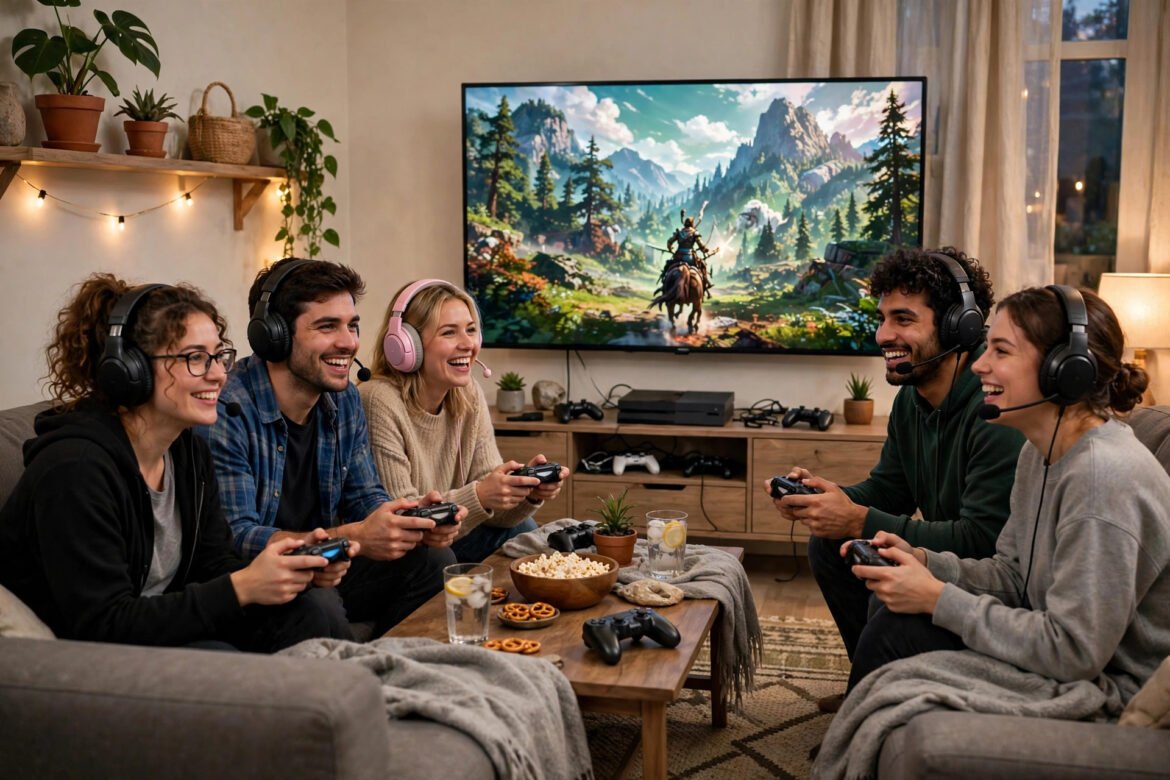
Multiplayer games are built around playing with or against other people in real time. These include cooperative adventures, where a team works together against the game itself, competitive shooters and sports games, where players face each other, and battle royale games, where many players compete until one remains. Multiplayer games are social by nature, and their appeal depends heavily on the community: a welcoming group of players makes a good game great, while a hostile one can ruin it.
Mobile online games are designed for phones and tablets, with touch controls, short sessions and the ability to play anywhere. Many are free to start, and they range from quick puzzle and card games to full multiplayer experiences that rival console titles. Their convenience is unmatched, but the sheer volume of low-quality mobile games means it pays to be selective, and to check whether a game needs a constant connection before relying on it during travel.
Cloud games are streamed to your device over the internet rather than running on the device itself. This means a modest laptop, tablet or even a television can play games that would normally need powerful hardware, since the heavy work happens on a remote server. Cloud gaming is an exciting option for people who do not want to buy expensive equipment, but it depends entirely on a fast, stable connection, and it is less forgiving of poor internet than any other type.
Beyond these, there are persistent online worlds that thousands of players share at once, casual social games built around playing with friends, and competitive esports titles designed for organised tournaments. Most players will enjoy a mix, choosing different types for different moods and occasions rather than committing to a single one.

How to Choose an Online Game Worth Your Time
Choosing an online game is less about finding the most popular title and more about finding one that fits your life. Start with your mood and your available time, since these two filters eliminate most unsuitable games immediately. A tense competitive match is a poor choice for winding down before bed, and a sprawling online world is a poor choice for a ten-minute break. For a fuller walkthrough of matching games to mood, time and device, our guide Game to Play: How to Pick the Perfect Game for Any Mood, Device or Session covers the decision in detail, and its advice applies just as well to online games as to games in general.
Next, consider who you want to play with. If you want to play with friends, choose a game your friends already play, or one that works across different devices, since cross-platform play removes the barrier of everyone owning the same hardware. If you prefer playing solo, look for online games with strong single-player modes or cooperative options where you can team up with strangers without pressure. And if you are new to a genre, look for games with gentle learning curves, helpful tutorials and communities known for welcoming newcomers.
Before committing, check a few practical things. How long does a typical session last, and can you pause or save easily? Is the game still actively supported and updated, or is its player base shrinking? Do player reviews repeatedly mention the same problems, such as aggressive monetisation, persistent bugs or unfair matchmaking? A few minutes of research here can save you hours of frustration, and free trials, demos and free-to-play entry points let you try a game properly before spending anything.
Connection Requirements: What Your Internet Actually Needs to Do
Online gaming is more sensitive to connection quality than most other internet activities. Streaming video can buffer ahead to hide a wobbly connection, but a multiplayer game cannot: every action you take has to travel to a server and back in real time. The key measure is latency, often called ping, which is the delay between your action and the game’s response. Low latency feels instant and responsive; high latency feels sluggish, with characters moving after you told them to, or shots landing where your target used to be.
For most online games, a stable connection matters more than a headline-fast one. Browsing, messaging and music need very little speed, and even many multiplayer games need only a modest connection, provided it is steady. What causes problems is instability: a connection that drops, spikes or struggles at peak times. A wired connection is generally more stable than Wi-Fi for competitive play, so if you regularly play online on a console or PC near your router, a cable is a simple upgrade worth considering.
Cloud gaming is the exception, since it streams the entire game picture to you in real time. It needs a considerably faster and more stable connection than other types, and it suffers visibly when the connection falters, with blurry images or stuttering. If your connection is unreliable, cloud gaming will frustrate you, and a downloaded game with online modes will serve you far better. For travel or mobile play, remember that some online games need a constant connection and will not work offline at all, so check before you rely on one for a journey.
Staying Safe Online: Age Ratings, Chat and Spending Controls
Online games bring people together, and that social element is both their greatest strength and their main risk. The good news is that the tools for staying safe are well established, and using them is mostly a matter of knowing they exist and taking a few minutes to set them up.
Age ratings are the first check, especially for children. Ratings describe the content of a game, such as violence, language or mature themes, and they are a far better guide than popularity or what friends are playing. A game rated for adults is not made suitable by turning the chat off, since its content, themes and community are still designed for older players. Check the rating before downloading, and treat it as a starting point for a conversation with your child about what they are playing and why.
Chat controls are the second layer. Most online games and platforms let you limit who can message you, mute individual players, block unwanted contact, and report abusive behaviour. For children, the safest settings usually restrict chat to approved friends only, or turn voice chat off entirely. For adults, mute and block tools are not rude: they are how you curate your own experience, and there is no obligation to stay in a match or a conversation that has stopped being enjoyable.
Spending controls are the third layer, and they matter for adults as well as children. Many online games are free to start and earn money through optional purchases, such as cosmetic items, extra characters or faster progress. These purchases are optional by design, but they can add up quickly, especially for children who do not connect a button press with real money. Setting a spending limit, requiring a password or approval for every purchase, and turning off saved payment details on a shared device are simple steps that prevent most unpleasant surprises. Talk openly about in-game spending, so it is a conscious choice rather than a habit.
Finally, protect your account itself. Use a strong, unique password for gaming accounts, enable two-factor authentication where it is offered, and be cautious about links or messages from strangers promising free items or rewards, since these are a common route for account theft. Your gaming account often holds years of progress and purchases, so it deserves the same care as any other online account.
Playing on a Budget
Online gaming can be an inexpensive hobby, and it can also be a surprisingly costly one. The difference is rarely about income and almost always about habits. The most important thing to understand is how a game makes its money, since that shapes what it will cost you over time. Some games are a single purchase with everything included. Some are free to start but offer optional purchases. Some run on a subscription that gives access to a library of games for a recurring fee. Each model suits different players, and none is inherently better than the others.
Free-to-play games deserve a fair hearing: many excellent online games cost nothing to start and are genuinely enjoyable without spending anything. The test is simple: is the game fun without paying, or does it constantly pressure you to spend to progress? If a game feels like a shop with a game attached, it is probably not good value, however free it claims to be. Subscription libraries, meanwhile, are good value if you play often and try many games, and poor value if you play rarely, so review your subscriptions honestly from time to time and cancel the ones you no longer use.
The most effective budgeting habit is also the simplest: finish what you own before buying more. A backlog of unplayed games is money already spent on entertainment you never used, and resisting sale events for games you will not play soon is a genuine saving. Older games, meanwhile, are often excellent value, since they are fully patched, complete, and available at a fraction of their original cost, with active communities still playing them. Judge a game by the hours of enjoyment it gives you, not by whether it is new, and your gaming budget will stretch much further.

Online Gaming Etiquette: Being a Player Others Want Around
Online games are shared spaces, and a little consideration goes a long way. Communicate clearly with teammates, especially in cooperative games, where a short message about your plan beats silence. Be patient with new players: everyone was a beginner once, and a welcoming community keeps a game alive far longer than a hostile one. Accept defeat gracefully, since losing is part of competitive play, and the players who handle it well are the ones others want on their team.
Practical habits matter too. Keep your games updated so you are not the player holding up a match with a long download. Use a headset with a working microphone if your game relies on voice communication, and keep background noise down. And if you are playing with friends, agree on session length in advance, so nobody feels trapped in a game that has run far longer than planned. Online gaming is at its best when it is social, and social play works best when everyone respects each other’s time.
Common Mistakes With Online Games
- Choosing by popularity alone: The most played game is not necessarily the one that suits your mood, time or device.
- Ignoring connection quality: A great game on a poor connection feels like a bad game. Check your stability before blaming the title.
- Skipping safety settings: Age ratings, chat controls and spending limits take minutes to set and prevent most problems.
- Spending without a plan: Optional purchases add up. Set limits and require approval for purchases on shared devices.
- Playing through frustration: If a game or a community stops being fun, take a break or move on. Games are meant to be enjoyed.
- Neglecting updates: An out-of-date game means long waits and missed fixes. Enable automatic updates where your platform allows them.
- Sharing account details: Never share passwords or two-factor codes, even with people who seem trustworthy in a game.
Frequently Asked Questions
What are online games?
Online games are games that connect to the internet as part of how they are played, whether that means multiplayer matches with other people in real time, or single-player games with online updates, leaderboards and shared progress.
Do online games need a fast internet connection?
Most online games need a stable connection more than a very fast one, since low latency matters more than headline speed. Cloud games are the exception, as they stream the whole game and need a fast, steady connection to look and feel right.
Are online games safe for children?
They can be, with the right setup. Check age ratings, restrict chat to approved friends, set spending controls and require approval for purchases, and talk with your child about what they are playing and who they are playing with.
Can I play online games for free?
Yes. Many excellent online games are free to start, and browser games cost nothing at all. Judge a free game by whether it is fun without spending, and be wary of games that pressure you into frequent purchases to progress.
Conclusion
Online games offer something for every mood, schedule and device, from a quick browser puzzle to a sprawling multiplayer world shared with thousands of players. The key to enjoying them is choosing deliberately: pick a type that fits your time and connection, check that it is still supported and well regarded, set up age, chat and spending controls before you need them, and keep an honest eye on what you spend. Do that, and online gaming becomes what it should be: a flexible, social and affordable way to play, whether you have ten minutes on your phone or a whole evening with friends.