
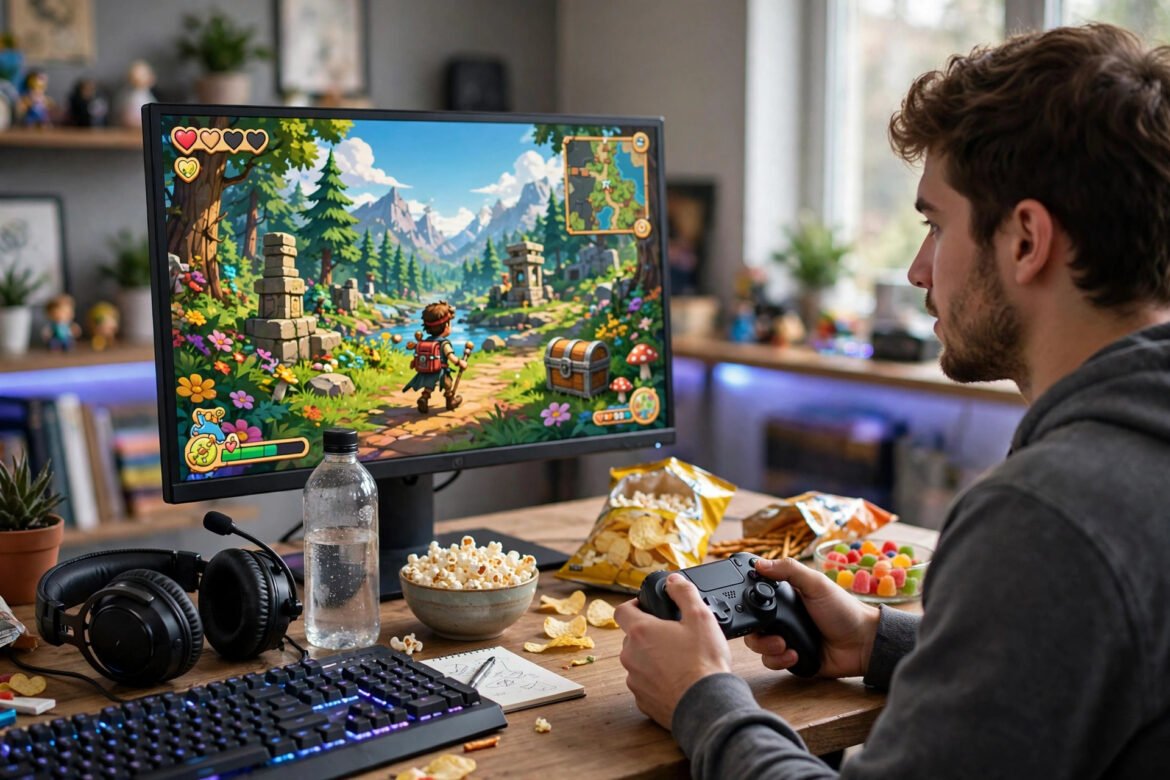
Everyone has been there: an evening free, a phone or console in hand, and no idea what game to play. With thousands of new releases every year and back catalogues stretching back decades, choosing a game can feel harder than playing one. Scrolling through store pages for half an hour and then watching something else instead is a familiar ritual, and it is entirely avoidable.
Picking the right game is not about finding the single “best” game in the world. It is about matching a game to your mood, your available time, your device and who, if anyone, you want to play with. A tense strategy epic is a poor choice for a ten-minute bus ride, and a casual puzzle game will not satisfy a group of friends gathered for a gaming night. This guide walks through how to choose a game to play for any situation, the genres worth knowing, how to judge whether a game is worth your time before you commit, and how to keep gaming fun rather than frustrating.
Start With Your Mood, Not the Charts
Top-seller lists are a reasonable starting point, but they ignore the most important variable: how you feel right now. Games are mood machines, and different moods call for very different experiences.
If you want to unwind after a long day, look for low-pressure games: cosy farming and building games, gentle puzzle games, or exploration adventures with no fail state. These let you switch off without demanding fast reactions or punishing mistakes. If you want a challenge, competitive shooters, fighting games, racing games and difficult platformers offer the thrill of mastery, where progress is earned through practice. If you want a story, narrative adventures and role-playing games deliver characters and plots that rival television, with the added pull that your choices shape what happens next. And if you want company, multiplayer games turn gaming into a social event, whether that means cooperating with friends against the computer or competing against strangers online.
A useful trick is to keep a short personal list, not of games you “should” play, but of games for each mood: one relaxing game, one challenging game, one story game and one social game. When you sit down to play, you only have to pick a mood, and the game picks itself.
Match the Game to Your Time
Time is the second filter, and it matters more than most players admit. A game that needs an hour to get going will frustrate you if you only have twenty minutes, while a game designed for short bursts can feel thin if you have a whole Saturday free.
For sessions under thirty minutes, mobile games, roguelikes with short runs, arcade racers, puzzle games and quick online matches are ideal. They are built to be picked up and put down, and they respect a busy schedule. For one to two hours, most action adventures, sports games, strategy matches and story-driven chapters fit comfortably, giving you a satisfying chunk of progress in a single sitting. For long sessions, open-world games, sprawling role-playing games and deep strategy or simulation titles reward extended play, letting you sink into a world, build something over time, or follow a long narrative arc.
Be honest about your real session length, not your ideal one. If evenings usually get interrupted, a game with frequent save points and short missions will serve you far better than one with hour-long unskippable sequences. Nothing kills enthusiasm for a game faster than repeatedly losing progress to real life.

Pick a Game by Platform
Your device narrows the field considerably, and each platform has its own strengths. Consoles offer the simplest living-room experience: a controller, a television, and games optimised for that exact hardware, with no settings to fiddle with. PC gaming offers the widest choice, the most customisation, and often the best performance, but it asks more of you in setup and maintenance. Mobile gaming is the most accessible of all, with a phone always in your pocket and games designed for touch controls and short sessions, though the sheer volume of low-quality titles means curation matters.
Handheld consoles and cloud gaming sit between these worlds, letting you play bigger games away from the television or on hardware that could never run them locally. Cross-platform games, which let console, PC and mobile players share the same matches, are worth prioritising if your friends play on different devices, since they remove the oldest barrier to playing together.
When choosing, think about where and how you actually play. A game you love but can only play in one room will get less use than a slightly less exciting game that fits into your commute, your lunch break and your sofa. Portability and convenience are genuine features, not compromises.
The Genres, in Plain English
Genre labels can be confusing, especially when store pages stack three or four of them onto one title. Here are the main ones, and who they suit:
- Action and adventure: Fast-paced, reaction-based play with exploration and combat. Great for players who want excitement and spectacle.
- Role-playing games (RPGs): Build a character, make choices and follow a long story. Great for players who love narrative and progression.
- Strategy: Plan, manage resources and outthink opponents, in real time or turn by turn. Great for patient, analytical players.
- Simulation and building: Run a farm, a city, a business or a household. Great for creative, relaxing play.
- Puzzle: Solve problems, spot patterns and think laterally. Great for short sessions and winding down.
- Sports and racing: Compete in realistic or arcade versions of real sports. Great for quick matches and playing with friends.
- Horror: Survive tense, frightening scenarios. Great for players who enjoy adrenaline, ideally with the lights on.
- Party and family: Simple, social games designed for groups of mixed ages and skill levels. Great for game nights.
- Educational and brain-training: Learn, practise memory, maths or language skills through play. Great for children and curious adults alike.
Most players enjoy several genres depending on mood, so do not box yourself in. The player who loves horror on Friday night may want a farming simulator on Sunday morning, and both choices are equally valid.
Online and Multiplayer: Playing With Others
Some of the best gaming memories come from playing with other people, but multiplayer gaming has its own considerations. Cooperative games, where players work together against the computer, suit friends who want a shared challenge without anyone feeling targeted. Competitive games, where players face each other, suit those who enjoy rivalry and measurable improvement. Massively multiplayer games offer persistent worlds with thousands of other players, but they demand more time and commitment than most genres.
Connection quality matters enormously for online play. Lag, the delay between your action and the game’s response, can ruin an otherwise great match, and it is usually a networking problem rather than a game problem. A wired connection is generally more stable than Wi-Fi for competitive play, which is why it is worth understanding your home network setup. Our guide comparing Cat 6 and Cat 5e Ethernet cables explains which cable suits gaming, streaming and working from home, and why both are excellent for most households despite the technical differences. A stable connection, a decent headset and a little patience with new players will improve any multiplayer session more than a faster reaction time ever will.
Finally, remember that online communities vary wildly. Some are welcoming and helpful; others are hostile. Use mute and block tools freely, play with friends where possible, and never feel obliged to stay in a match that has stopped being fun.
Solo Play: Games for One
Solo gaming deserves more credit than it gets. Single-player games offer something multiplayer cannot: a story or world paced entirely around you, with no waiting for teammates, no pressure to perform, and the freedom to pause whenever life calls. Some of the most celebrated games of recent years are single-player experiences, from open-world adventures to tightly crafted puzzle games and emotional narrative titles.
Solo play is also the best way to learn a genre. If you are curious about strategy games, racing games or shooters but nervous about competing online, a single-player campaign lets you learn the mechanics at your own pace. Many games also offer difficulty settings that genuinely change the experience rather than just making enemies tougher, so do not be shy about choosing an easier mode. Games are meant to be enjoyed, and there is no prize for suffering through a difficulty level you hate.

Your Gaming Setup: Comfort Matters
You do not need an expensive setup to enjoy games, but a few basics make a real difference. A comfortable chair and a screen at eye level prevent the aches that cut sessions short. Good lighting reduces eye strain, especially during long evening sessions. For handheld and mobile play, a controller grip or a stand can transform comfort over a long session.
Cables and charging are the unglamorous part of a setup, and they are where small frustrations live. Controllers, headsets and handhelds all need power, and a desk or sofa setup that forces you to sit next to a socket is a setup that needs rethinking. Longer, well-chosen cables solve this quietly. Our guide to USB-C extension cables covers speed, charging capacity and compatibility, including the difference between passive and active cables and why certified cables matter for safety, which is useful whether you are extending a controller dock, a headset charger or a handheld charging station.
Keep your setup tidy and your games updated. Nothing deflates a planned gaming night like a forty-minute update on the one game everyone wanted to play, so enable automatic updates where your platform allows them.
How to Discover New Games Worth Your Time
Discovery is where most players get stuck, because store algorithms push whatever is already popular. A better approach mixes several sources. Recommendations from friends with similar taste beat any algorithm. Reviews from critics and players are useful when you read why someone liked or disliked a game, not just the score. Gameplay videos show you what a game actually feels like to play, which screenshots and trailers often hide. Free demos, free weekends and subscription game libraries let you try before committing, which is the single best way to avoid buyer’s remorse.
When evaluating a game, check three things beyond the headline rating: how long it takes to complete, since a forty-hour epic and a four-hour gem serve different needs; whether its difficulty and controls suit you, since a brilliant game with controls you hate is a bad purchase; and whether it is still supported, since online games with dwindling player bases can become hard to enjoy. Player reviews that mention bugs, aggressive monetisation or misleading trailers are worth taking seriously, especially when the same complaint appears repeatedly.

Gaming on a Budget: Cost Factors, Not Just Price Tags
Gaming can be an inexpensive hobby or a costly one, and the difference is mostly about habits rather than income. Several factors decide what a game really costs you over time. Some games are free to start but earn money through optional purchases, which can add up if you buy frequently. Others are a single purchase with everything included. Subscription libraries offer a large catalogue for a recurring fee, which is good value if you play often and poor value if you only play occasionally. Older games and sale events often offer excellent value, since a game that is a few years old is usually fully patched and complete.
The sensible approach is to think in terms of hours of enjoyment rather than headline cost. A game you play for months is good value almost regardless of how you paid for it, while a game abandoned after an hour is poor value at any cost. Backlogs are the hidden expense: buying games faster than you play them means paying for entertainment you never use, so finishing what you own before buying more is the most effective gaming budget there is.
Games for Different Ages and Occasions
The right game to play depends on who is playing. For young children, look for age ratings, simple controls, no chat with strangers, and games that encourage creativity or problem-solving rather than frustration. For family game nights, party games with simple rules and short rounds work best, since they let everyone join in regardless of experience. For a quiet evening alone, story-driven or puzzle games offer calm immersion. For a competitive night with friends, sports, racing or fighting games deliver instant rivalry and rematches.
Occasions matter too. A long journey suits offline mobile games that do not need a connection. A rainy weekend suits a long adventure you can sink into. A short break between tasks suits a puzzle game with quick rounds. Matching the game to the occasion is what turns “I don’t know what to play” into an easy decision.
Common Mistakes When Choosing a Game
- Only playing what is trending: Popular is not the same as suited to you.
- Ignoring your real session length: A game that needs hours will frustrate a twenty-minute window.
- Buying on trailers alone: Trailers show highlights; gameplay videos show reality.
- Forcing a genre you dislike: Life is too short for games that feel like homework.
- Neglecting connection and setup: Lag and discomfort ruin good games.
- Letting a backlog guilt you: Unfinished games are not debts; play what excites you now.
Frequently Asked Questions
How do I find a game to play when I am bored of everything?
Try a genre you have never played, revisit an old favourite, or play a short indie game. Boredom usually means you need novelty, not a better version of what you already play.
What is a good game to play with friends online?
Cooperative adventures and team-based games work best for groups, since everyone contributes. Choose cross-platform titles if your friends use different devices, and prioritise games with short matches so nobody waits long between rounds.
What is a good game to play on a phone?
Puzzle games, card games, turn-based strategy and short arcade games suit phones best, because they work with touch controls and short sessions. Check whether a game needs a constant internet connection before relying on it for travel.
How long should a gaming session be?
There is no single answer. Short sessions of thirty to sixty minutes suit most adults on weekdays, while longer weekend sessions work well for story and open-world games. Take regular breaks, especially during competitive play, to stay comfortable and focused.
Are free games worth playing?
Absolutely. Many excellent games are free, supported by optional purchases or advertising. Judge a free game by whether it is fun without spending, and be wary of games that pressure you into frequent purchases to progress.
Conclusion
The perfect game to play is not hiding at the top of a chart. It is the game that fits your mood, your time, your device and your company, right now. Start with how you feel, filter by how long you have, pick a platform you actually use, and try games before committing where you can. Keep a short list of favourites for each mood, sort out the small setup details like connection and charging that quietly ruin sessions, and give yourself permission to stop playing anything that stops being fun. Do that, and the question changes from “what game should I play?” to the much better problem of having too many good games to choose from.